
Water shortages, electricity grid pressure and environmental concerns have made data centres a controversial topic in the United States. But are these concerns equally relevant to New Zealand? In fact, when looking at Data Centres in New Zealand: Why the US Debate Doesn’t Tell the Whole Story, the answer is more nuanced than the headlines suggest.
If you follow international technology news, you could be forgiven for thinking that data centres are environmental villains. Reports from the United States frequently describe enormous water consumption, electricity shortages, rising power bills and communities protesting against new developments.
These concerns are real. But applying the same narrative to New Zealand overlooks some important differences in climate, electricity generation, engineering and infrastructure planning.
A data centre in Southland is not the same proposition as one in Arizona or Virginia.
Understanding why requires looking beyond the headline figures.
1. The water question: cooling doesn’t necessarily mean consuming water
Every data centre generates heat. Thousands of servers operating continuously produce substantial thermal energy, which must be removed to keep equipment functioning reliably.
In hotter climates, many facilities rely on evaporative cooling, where water is used to remove heat. This can be highly efficient from an electricity perspective, but it comes at the cost of significant water consumption.
New Zealand’s cooler climate creates another opportunity: dry cooling.
Modern dry cooling systems use external air and heat exchangers to remove heat without continuously consuming water. In colder locations such as Southland, these systems can operate efficiently for most of the year.
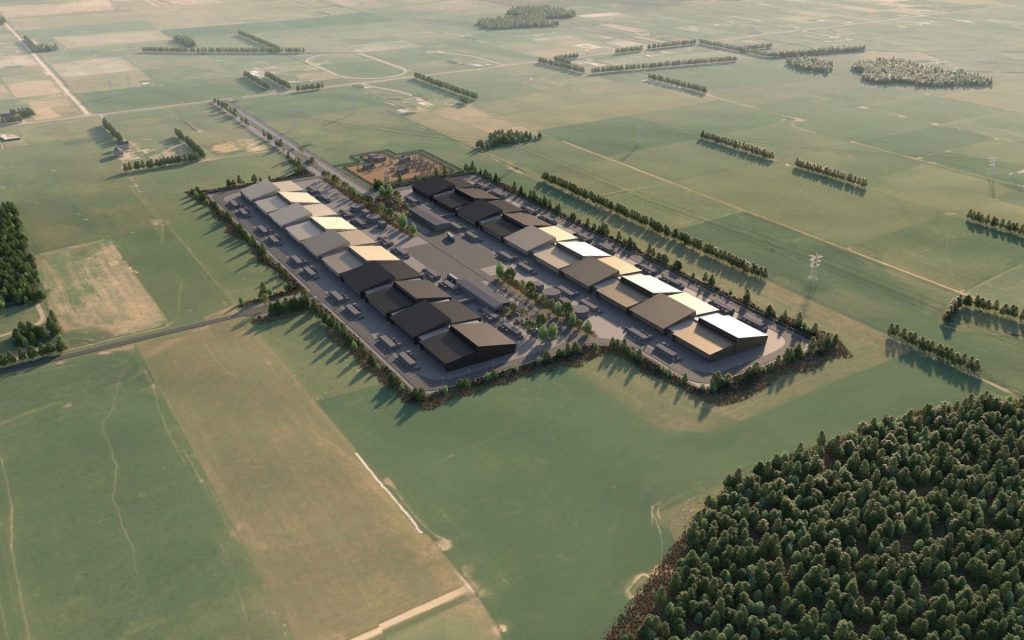
During a recent presentation to the Southland Business Chamber, DataGrid explained that its proposed Southland facility uses a predominantly dry cooling design.
Its internal liquid cooling system is a sealed circuit using glycol-based coolant, similar in principle to a vehicle’s cooling system. The coolant circulates to remove heat from the servers and transfers it to external cooling equipment.
So where does water come in?
During particularly hot conditions, a small amount of highly purified water can be sprayed onto the cooling system to provide additional evaporative cooling. This is an occasional requirement, rather than continuous water consumption.
DataGrid indicated that its refined design would reduce the originally consented water take by at least 70%, with a target below 66 million litres annually. The company also stated that rainwater is its preferred source, although the final design and consent variation remain subject to confirmation.
The important distinction is that water is a design choice, not an unavoidable requirement of operating a data centre.
2. New Zealand’s climate is a competitive advantage
Why can a facility in Southland achieve cooling efficiencies that would be difficult in Singapore, Arizona or Saudi Arabia?
Because temperature matters.
The greater the difference between the outside air temperature and the temperature required by the cooling system, the easier it is to reject heat.
Cooler ambient temperatures mean less mechanical cooling, less reliance on evaporative systems and lower energy consumption by cooling equipment.
This is reflected in two industry metrics:
- Power Usage Effectiveness (PUE): How much additional electricity a facility consumes beyond the IT equipment itself. Lower is better.
- Water Usage Effectiveness (WUE): How much water is consumed relative to the energy used by the IT equipment. Again, lower is better.
DataGrid’s stated target is an annual PUE below 1.1, alongside very low water consumption.
This demonstrates why location and engineering decisions matter just as much as the computing equipment inside the building.
3. Does a data centre put pressure on New Zealand’s electricity grid?
This is perhaps the most legitimate question surrounding large-scale digital infrastructure.
Data centres consume significant electricity. There is no point pretending otherwise.
However, the impact on the electricity system depends on how the facility is connected, how its energy is sourced, who pays for infrastructure and whether additional generation is developed.
New Zealand has a distinctive electricity market, with a substantial renewable generation base. According to DataGrid’s presentation, large, long-term electricity supply contracts provide generators with the commercial certainty needed to invest in new generation capacity.
A data centre committing to purchase electricity over 15 years can help underpin investment that would be difficult to justify through short-term demand alone.
DataGrid cited Mercury’s planned addition of more than 1.5 GW of sustainable generation capacity by 2030 as an example of investment occurring within the same timeframe.
There is also an important infrastructure cost distinction.
Large electricity consumers pay the full transmission costs associated with their consumption, rather than relying on the same residential subsidies described in the presentation.
In other words, the objective is for large users to pay their way while supporting investment in the infrastructure required to serve them.
4. Batteries can make the grid more stable
An unexpected part of the Southland proposal is its battery energy storage system.
Rather than being simply backup power for the data centre, the batteries are also intended to support the wider electricity network.
AI computing workloads can change their electricity demand extremely quickly. DataGrid described potential changes of 50 MW in less than a minute.
Without mitigation, such rapid changes can create challenges for grid operators.
Battery storage can absorb these fluctuations, presenting a smoother demand profile to the network. It can also provide support for voltage and frequency stability.
This is an important shift in perspective: a data centre does not have to be merely a consumer of electricity. With appropriate design, it can also provide useful grid services.
5. The real lesson: technology is not the problem; design is
The American experience highlights what can happen when data centres are developed in unsuitable locations, rely heavily on water-intensive cooling or place excessive demands on existing infrastructure.
But these outcomes are not inherent to the technology.
New Zealand has the opportunity to develop digital infrastructure differently, taking advantage of its climate, renewable electricity resources, modern cooling systems and carefully planned grid connections.
The Southland project illustrates how these choices can materially change the environmental footprint of a facility, although its final operating performance will ultimately need to be demonstrated.
Building New Zealand’s digital future responsibly
Data centres are becoming essential infrastructure for cloud computing, artificial intelligence, communications and the digital economy.
The question is not whether New Zealand will need more of them. It is how we build them responsibly.
For New Zealand, the opportunity is to combine world-class digital infrastructure with the environmental advantages that our geography and energy system offer.
The next time you read a headline about data centres draining water supplies or overwhelming electricity grids, remember that not all data centres are created equal.
The technology is global. The environmental impact is local. And the choices we make in New Zealand matter.